🧾 Meta Description:
Iceland, once known for being mosquito-free, has now seen its first-ever mosquitoes. Discover how climate change, global warming, and human travel are reshaping insect life in the Arctic.

🦟 Mosquitoes Invade Iceland: Will They Survive the Winter?
For centuries, Iceland stood proudly as one of the few mosquito-free places on Earth — a cold, windswept island where the infamous buzzing pests never dared to live. But now, that’s changing. In 2025, reports confirmed that mosquitoes have finally arrived in Iceland. As winter sets in, the big question is: can they survive the Arctic cold?
This surprising discovery has sparked curiosity among scientists, environmentalists, and everyday people around the world. Could mosquitoes, the ultimate survivors, really adapt to one of the harshest climates on the planet? And if so — what does that mean for the future of our warming world?
🌍 Iceland: Once a Mosquito-Free Haven
Until recently, Iceland was one of the last mosquito-free regions on Earth, along with Antarctica. Despite its lush summers filled with green meadows and melting glaciers, the country’s volatile weather patterns — freezing winters, quick thaws, and sudden temperature drops — kept mosquitoes away for centuries.
That all changed in October 2024, when researchers from the Natural Science Institute of Iceland (NSII) announced the discovery of Culiseta annulata, a mosquito species never before confirmed on the island. Local resident Björn Hjaltason caught three of them — two females and one male — using a ribbon soaked in red wine while on his farm north of Reykjavík.
The find made headlines worldwide: Iceland’s mosquito-free era might finally be over.
🧬 Who Are These New Invaders?
The newly discovered species, Culiseta annulata, is common across Europe, particularly in places like the UK, Sweden, and Finland. These mosquitoes are known for being cold-tolerant — a key trait that might help them survive in Iceland’s extreme climate.
Fortunately, they are not dangerous to humans. Unlike species such as Aedes aegypti (which spreads dengue and Zika), Culiseta annulata doesn’t transmit human diseases. They are more of a nuisance than a health threat — but their arrival is still an ecological wake-up call.
✈️ How Did Mosquitoes Reach Iceland?
Experts at the NSII believe that the mosquitoes likely arrived via human transportation. Airplanes, ships, and imported goods have long been known to accidentally carry insects and other small species across borders.
Previous instances have shown that mosquitoes can hitch rides in cargo or on airplanes. However, until now, none of those visitors had established a population. The discovery of both male and female mosquitoes in the same location suggests that reproduction may already be possible.
🌡️ Climate Change and the Expanding Mosquito Frontier
Entomologists like Dr. Jessica Ware from the American Museum of Natural History say that this arrival might not be a coincidence. “The fact that mosquitoes never managed to settle in Iceland before — and suddenly they are now — makes me think it’s because of the climate,” she explained.
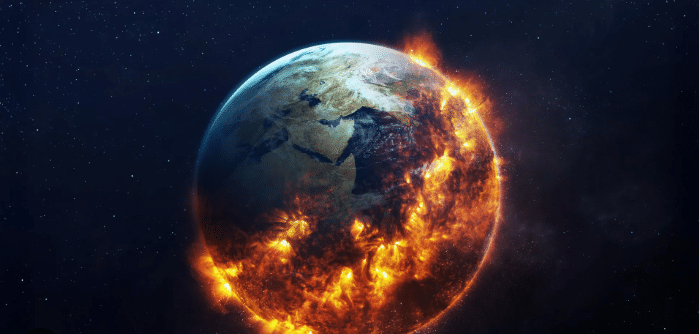
The Arctic is warming nearly four times faster than the global average. Iceland, like many northern regions, is experiencing record-breaking heat waves and milder winters. These changes are altering ecosystems and allowing species that once couldn’t survive to suddenly thrive.
Insects are some of the first responders to climate change. When temperatures rise, they migrate to new areas that were once inhospitable. The arrival of mosquitoes in Iceland could be a sign of larger environmental shifts happening across the planet.
🧊 Can Mosquitoes Survive Iceland’s Harsh Winter?
Here lies the ultimate test. Icelandic winters are no joke — freezing winds, snow-covered landscapes, and temperatures that hover around 0°C (32°F). Yet, surprisingly, Culiseta annulata might just be up for the challenge.
According to the NSII, these mosquitoes are adapted to cold and are known to hibernate as adults during the winter months. They often find shelter in barns, basements, and caves, where they can rest until spring returns. This same behavior allows them to survive in countries like Sweden and Finland, where winters are nearly as harsh as Iceland’s.
Still, Iceland’s unique freeze-thaw cycles could pose a problem. The island frequently warms and refreezes multiple times each year, which might confuse or kill mosquitoes emerging from hibernation too early. Whether these insects can truly adapt to Iceland’s unpredictable climate remains to be seen.
🧩 Random Chance or Environmental Shift?
Not every species that arrives in a new land manages to stay. As Dr. Kelsey Lyberger, an ecologist at Arizona State University, points out, sometimes it’s just luck.
“If those few individuals don’t survive or fail to reproduce, that’s the end of the population,” she says. In other words, Iceland’s mosquitoes might just be a temporary accident — unless more arrive and establish a sustainable breeding population.
This concept highlights how fragile new ecosystems can be. For mosquitoes to truly “claim” Iceland, they must not only survive the winter but also reproduce successfully next spring.
🐉 The Domino Effect: Other Species Might Follow
If mosquitoes manage to adapt, Iceland’s ecosystem could change in surprising ways. As Dr. Ware explains, mosquitoes are like “climate canaries” — early warning signals of environmental transformation.
Where mosquitoes go, their predators often follow. Species like the Emperor dragonfly (Anax imperator), which feed on mosquitoes, might expand their territory northward as well. This chain reaction could introduce a host of new insects — and even birds — into Iceland’s delicate ecosystem.
Climate-driven migrations like this are already happening across northern Europe. Dragonflies, butterflies, and even some species of wasps have shifted their habitats northward in recent decades.
🌿 A Symbol of a Warming Planet
While mosquitoes may seem like a small problem, their presence in Iceland carries a big message: the world’s climate is changing faster than we think.
A few decades ago, the idea of mosquitoes buzzing around Reykjavík would have sounded absurd. Today, it’s a scientific reality. The insects themselves are not dangerous — but what they represent is profound.
If even Iceland, with its cold winds and glaciers, can no longer resist these tiny invaders, what place on Earth can?
🌎 Lessons for the Future
The arrival of mosquitoes in Iceland is more than a quirky news headline — it’s a climate signal. It reminds us that no ecosystem is immune to global warming. From the Arctic tundra to tropical rainforests, rising temperatures are rewriting the rules of nature.
Researchers warn that as species like mosquitoes expand into new territories, they can disrupt local ecosystems, affect food chains, and even change human living conditions. For now, Culiseta annulata is harmless, but future species might not be.
The story of Iceland’s mosquitoes is still unfolding — but it’s one that speaks volumes about the state of our planet.
❓ Frequently Asked Questions (FAQs)
1. Are there mosquitoes in Iceland now?
Yes, mosquitoes have recently been discovered in Iceland for the first time. The species identified is Culiseta annulata, which is common in Europe and known for tolerating cold temperatures.
2. Are Icelandic mosquitoes dangerous?
No. Culiseta annulata does not transmit diseases to humans. They are considered a nuisance but not a health risk.
3. Why didn’t Iceland have mosquitoes before?
Iceland’s rapidly changing climate — frequent freeze-thaw cycles and cold temperatures — made it impossible for mosquito larvae to survive year-round.
4. Could climate change be responsible for this?
Most likely yes. Rising global temperatures are enabling insects to expand their ranges into previously uninhabitable regions like Iceland.
5. Will mosquitoes survive Iceland’s winter?
Scientists are unsure. Culiseta annulata can survive cold climates, but Iceland’s unique freeze-thaw weather could make survival difficult.
6. Could other insects follow?
Yes. Dragonflies, in particular, may follow as they prey on mosquitoes and are also shifting north due to warming climates.
🧭 Final Thoughts
The discovery of mosquitoes in Iceland marks a turning point — not just for the island, but for the planet. It’s a vivid reminder that climate change is not a distant problem; it’s already transforming the natural balance of life everywhere.
As Iceland faces its first mosquito-filled winter, scientists — and the world — will be watching closely to see if these tiny survivors can make it through the cold.
Because if they can thrive there, they can thrive anywhere.